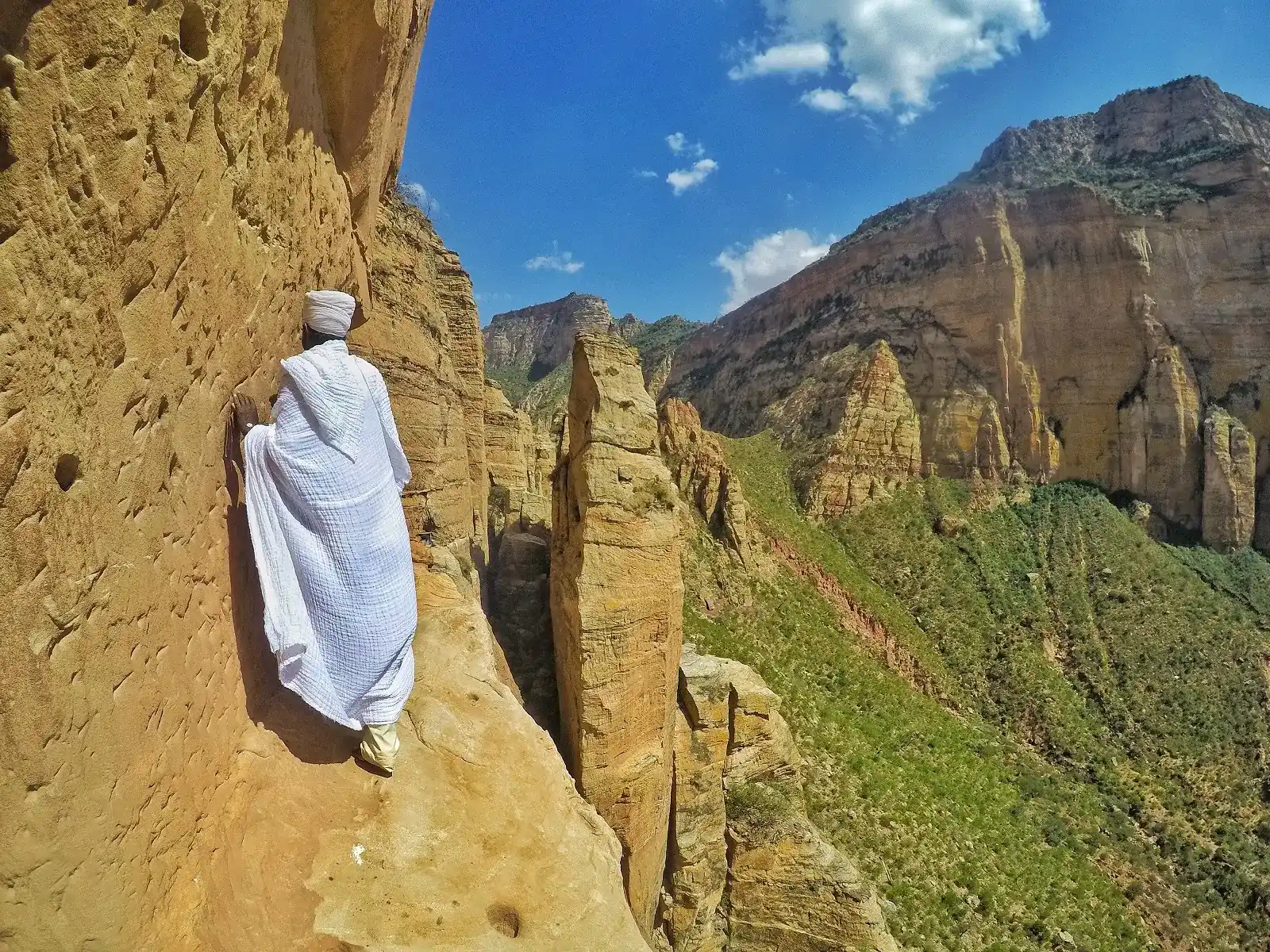
Picture thousands of people in white robes standing shoulder to shoulder before sunrise, drums going, priests in gold and crimson carrying an object nobody’s allowed to look at directly and then the water gets blessed and half the crowd jumps straight in. That’s Timket, which translates to ‘baptism’. It’s Ethiopia’s biggest religious festival, it happens once a year, and it’s not staged for tourists you are watching (and can take part in) a ritual that is run unbroken for over a thousand years.
Here’s what the festival actually is, when it happens each year, where to watch it, and what you need to lock in months before you fly.
What Timket Actually Is
Timket is the Ethiopian Orthodox celebration of Epiphany, the baptism of Jesus in the Jordan River. It’s also spelled Timkat. Same festival, same pronunciation, both spellings show up constantly in guidebooks and on tour sites, so don’t let that trip you up.
The whole thing revolves around the Tabot, a replica of the Ark of the Covenant that sits inside every Ethiopian Orthodox church, wrapped in cloth, never shown to the public. Once a year, priests carry it out in procession to a body of water, and that water gets blessed the next morning in front of thousands of people. UNESCO lists Timket as Intangible Cultural Heritage. That’s not a marketing line, it’s recognition that this ritual has run, largely unchanged, for over a thousand years.
If you’ve been to Ethiopia during any other festival, Timket still won’t feel familiar. It’s louder, denser, and stranger to witness than almost anything else on the calendar.
Timket 2027 Dates
January 19, 2027 – a Tuesday. That’s the main day.
The festival actually runs three days:
- January 18 (Ketera): the eve. Priests carry the Tabot from the church to the water site in the evening procession.
- January 19 (Timket): the main event. Pre-dawn liturgy, the water blessing at sunrise, celebration through the day.
- January 20 (Kana Zegelila): Feast of St. Michael, a quieter third day tied to Jesus’s first miracle at the wedding in Cana.
One thing worth knowing: the date isn’t permanently fixed to January 19. In Gregorian leap years, it shifts to January 20, because it’s pegged to the Ethiopian calendar’s own leap cycle, not ours. 2027 isn’t a leap year, so January 19 is locked in but don’t assume that date for other years without checking first.
Where to See It – Gondar vs Lalibela vs Addis Ababa
You’ve got three real options. They’re genuinely different experiences, not just different backdrops for the same event.
Gondar – the classic choice
Fasilides Bath is the epicenter. Weeks before Timket, the water supply around Gondar gets rerouted to fill the bath’s pool, a structure that sits bone-dry the rest of the year. Watching that pool fill up is part of the buildup locals talk about.
Pick Gondar if you also want the castle complex. It’s the most historically loaded of the three options, and the festival crowd there is enormous.
Lalibela – the atmospheric choice
Processions move by candlelight through the paths between the rock-hewn churches. It’s the most visually striking version of Timket, full stop.
The catch: Lalibela sits at 2,500 meters. January nights are cold, and you’re up before dawn. Pick this one if you’re already building a trip around the churches and photography matters to you.

Addis Ababa – the convenient choice
Jan Meda ground hosts tens of thousands of people. It’s the easiest version logistically, since it’s your arrival city, no domestic flight required.
Pick Addis if your trip is short, or if you’re not sure you want to commit to internal flights around a festival where accommodation is already tight.
What Actually Happens (Hour by Hour)
The eve starts the real action. Priests in bright ceremonial robes lead the Tabot out of the church around 2am, wrapped and carried on the head of a priest. This object is never seen unwrapped by anyone outside the clergy. The procession moves toward the water site with singing, drumming, and enough noise that you will hear it before you see it.
By dawn, the priest blesses the water with a metal aspergillum. Then he sprinkles it over the crowd gathered at the water’s edge. A lot of people don’t wait for the sprinkling, they go straight in, fully submerging themselves in whatever pool, river, or tank is closest.
By late morning, the crowd’s still building. People queue for their turn at the blessing. This part moves slowly. Plan for standing around, not a quick in-and-out.
By afternoon, the tone flips completely. The Tabot goes back to the church until next year. Drums and traditional music take over, and what was a religious service an hour earlier turns into a street party with food and dancing.
Practical note nobody puts in writing clearly enough: be at the water site well before dawn if you want to actually see the blessing rather than the back of ten thousand heads. And it’s cold at that hour, even in the lowlands.
How to Plan Your Trip
Book three to four months out. Not “soon” – actually now if you’re reading this in September or October. Gondar and Lalibela have a limited number of tourist-standard rooms, and they sell out completely for Timket every single year. This is the one piece of advice in this whole guide that actually determines whether your trip happens.
Getting between hub towns means flying. Ethiopian Airlines runs the domestic routes to Gondar and Lalibela out of Addis Ababa.
What to wear: cover your shoulders and knees. This is a live religious service, not a costume party, dress like you’re attending a Sunday service, not staging a photoshoot. Bring warm layers for the early morning, even though it’ll be genuinely hot by midday.
One more thing worth saying outright: you’re a guest at someone else’s sacred ritual. Take the photos. Just don’t let getting the shot come before basic respect for the people actually practicing their faith in front of you.
Is It Safe to Attend?
Ethiopia’s a big country and conditions shift by region sometimes with short notice. Check your own government’s current travel advisory for whichever region you’re heading to, both before you book and again right before you fly. Don’t rely on a blog post from months ago (including this one) for that call.
Beyond that: it’s a massive, dense crowd event. Treat it like you’d treat any huge outdoor gathering, watch your belongings, set a meeting point with anyone you’re traveling with, and don’t expect to move through the crowd quickly once the procession’s underway.
Frequently Asked Questions
What is Timket?
Timket is the Ethiopian Orthodox celebration of Epiphany, marking the baptism of Jesus in the Jordan River. It centers on the Tabot, a replica of the Ark of the Covenant, carried in procession to a water source that's blessed the next morning.
When is Timket 2027?
January 19, 2027. The full festival runs three days, from the eve procession on January 18 through the Feast of St. Michael on January 20.
What is a Tabot?
A replica of the Ark of the Covenant, kept wrapped and hidden inside every Ethiopian Orthodox church. It's only brought out once a year, for Timket, carried on a priest's head in procession, never unwrapped in public.
Is "Timkat" the same as "Timket"?
Yes, both spellings refer to the same festival. You'll see both used interchangeably across guidebooks, news sites, and tour operators.
Gondar or Lalibela, which is better for Timket?
Gondar gives you the biggest crowds and the historic bathhouse ritual. Lalibela gives you candlelit processions through the rock churches and the most striking photos, but it's colder and higher-altitude. Neither is "better" outright it depends on whether history or atmosphere matters more to you.
Do I need a visa to attend?
Most nationalities need a visa to enter Ethiopia, generally arranged through the official e-visa system in advance. Requirements change, so check current rules before booking flights.
Plan Your Timket Trip
We’re running trips. If you want to actually be standing at Fasilides Bath or on the path into Lalibela on January 19, 2027, check our North Ethiopia itinerary and ask us to build it around Timket dates or just get in touch and we’ll sort the logistics with you directly. Replies usually come back in minutes.